The best educational flash cards match a child’s current learning goal, whether that is building vocabulary, practicing letter sounds, or reinforcing early math. These picks include simple screen-free cards and interactive sets, so compare the subject, age range, and style of practice that fit your child.
Quick Top Products
Educational Insights Hot Dots Phonics Fun
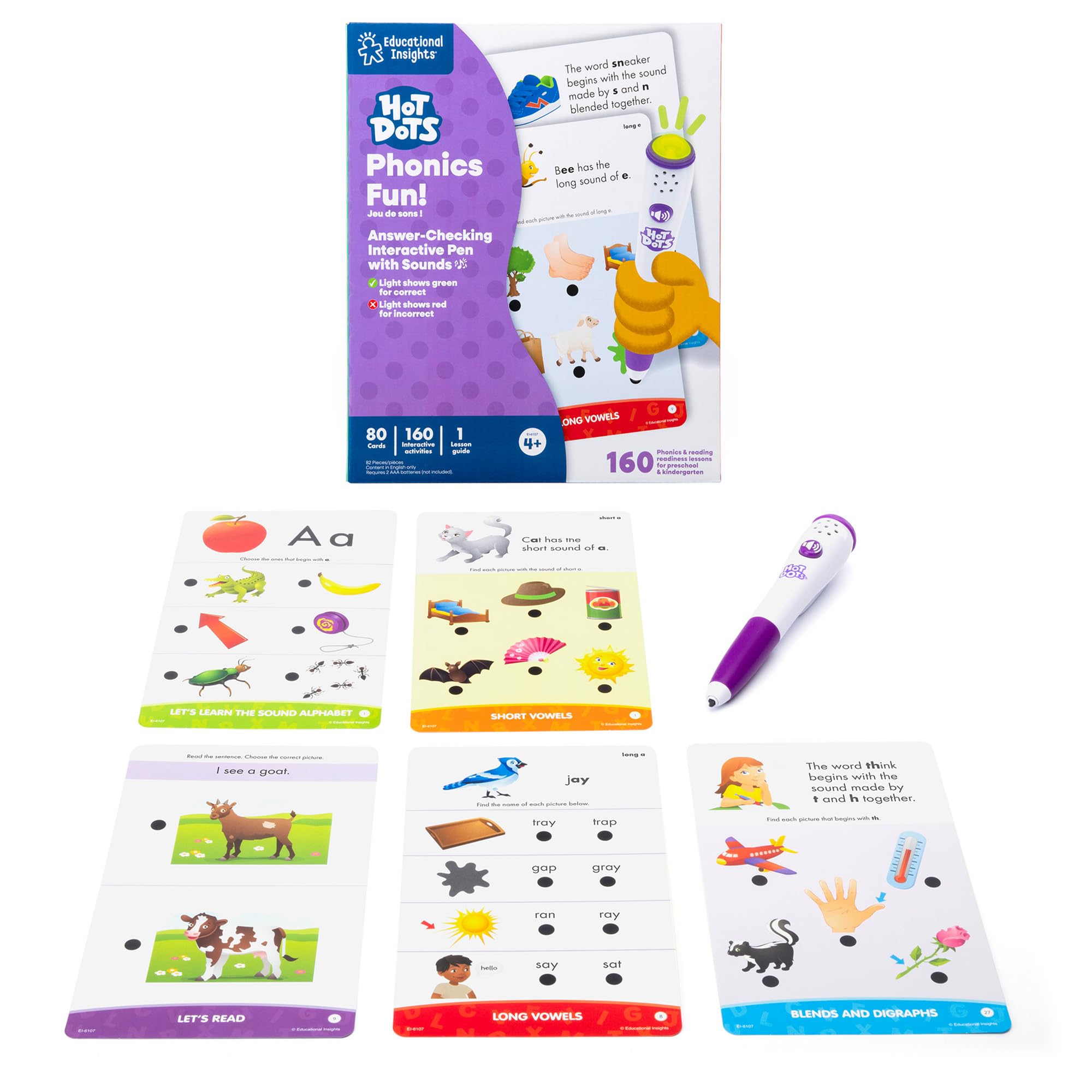
- Includes 80 double-sided cards with 160 activities and an interactive pen.
- Practices letter sounds, vowels, blends, digraphs, and sight words.
- The pen gives visual and audio feedback, with sounds that can be muted.
Best For: Preschoolers and kindergarteners practicing letter sounds, blends, and sight words independently.

Educational Insights Hot Dots Numbers & Counting
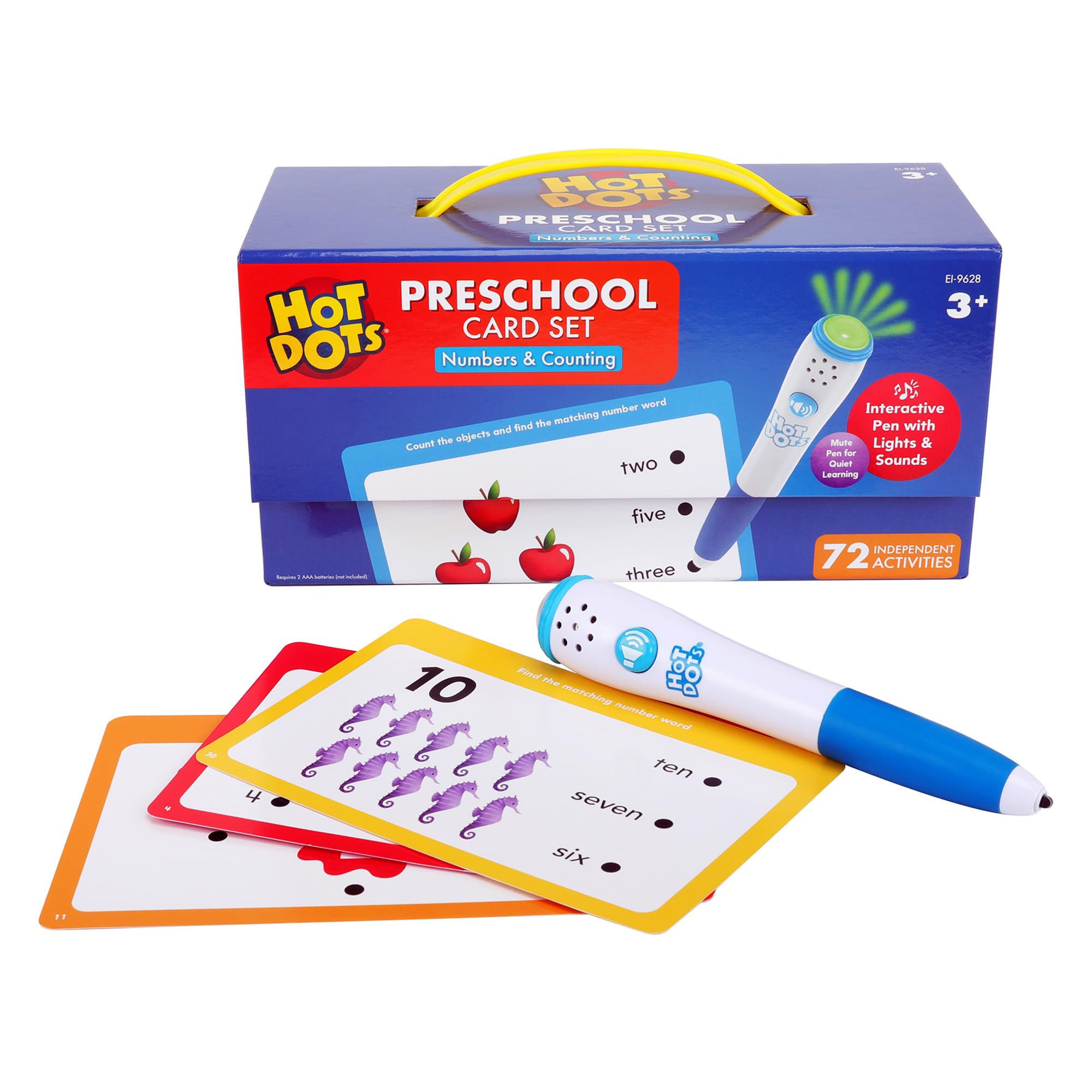
- Provides 36 double-sided cards with 72 activities and an interactive pen.
- Targets number recognition, number words, counting, and sequencing.
- Includes a portable handled storage case.
Best For: Preschoolers ages 3–5 learning number recognition, counting, number words, and sequencing.
Spanish & English Talking Flash Cards, 510 Words
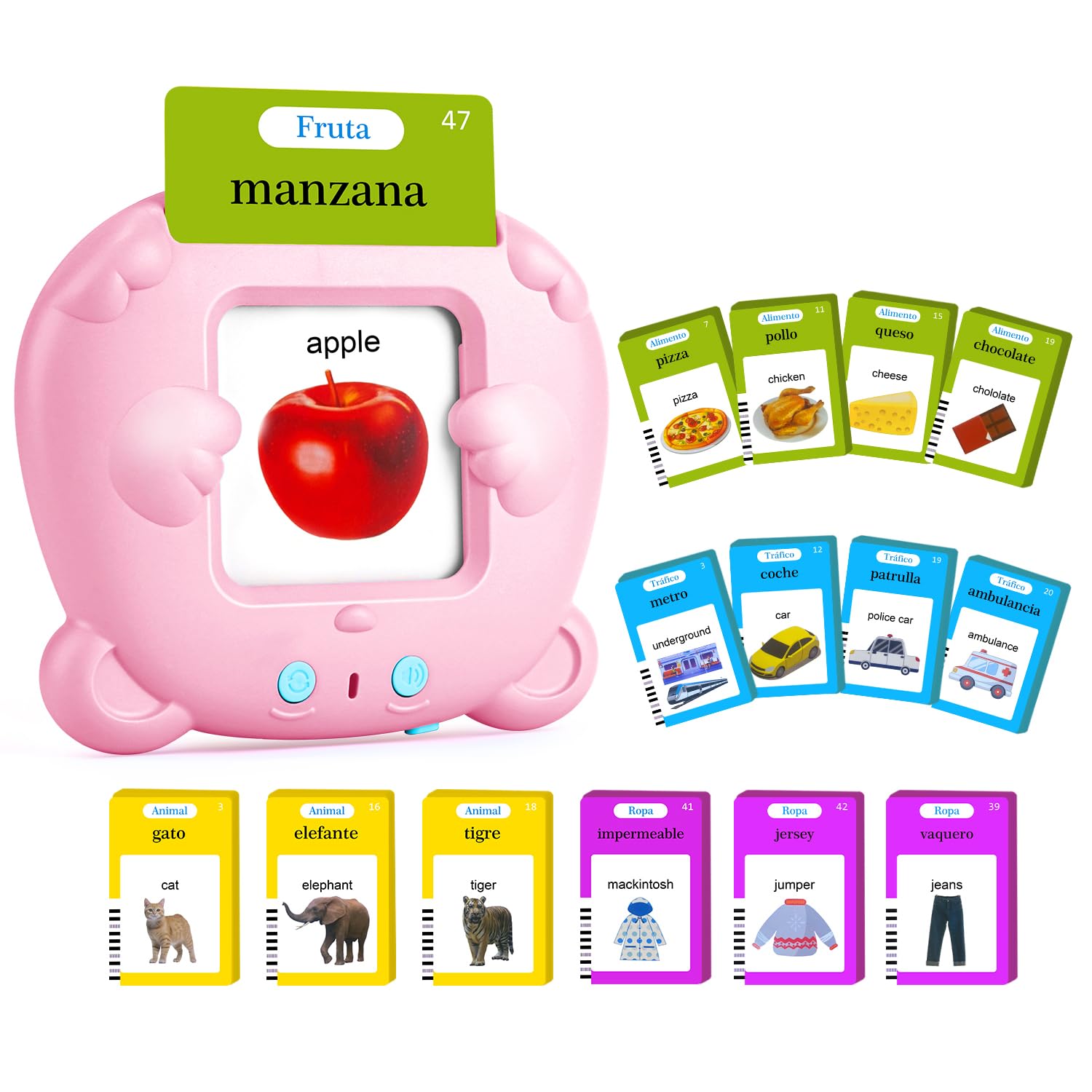
- Includes 255 double-sided cards covering 510 words.
- The reader speaks words and plays simulated sounds, with three children’s songs.
- The reader’s rechargeable battery lasts up to 4.5 hours.
Best For: Families and educators seeking broad spoken Spanish-English vocabulary practice with a card reader.
Korean English Talking Flash Cards, 510 Words
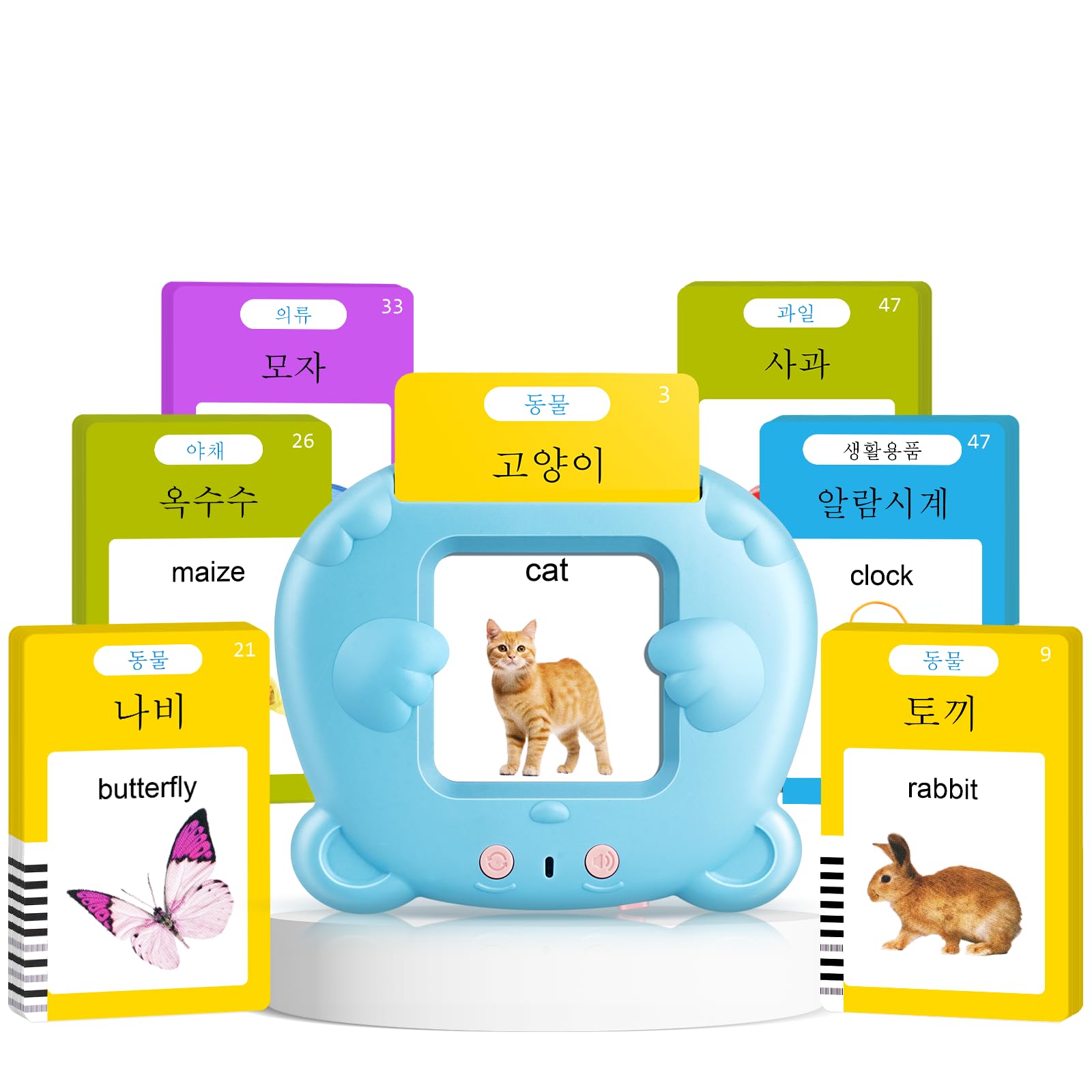
- Includes 255 double-sided cards and 510 sight words.
- The reader speaks in standard Korean and English and includes three nursery rhymes.
- The reader has a built-in rechargeable battery lasting up to 4.5 hours.
Best For: Korean-English households seeking spoken vocabulary practice across familiar early-learning themes.
Arabic English Talking Flash Cards, 510 Words
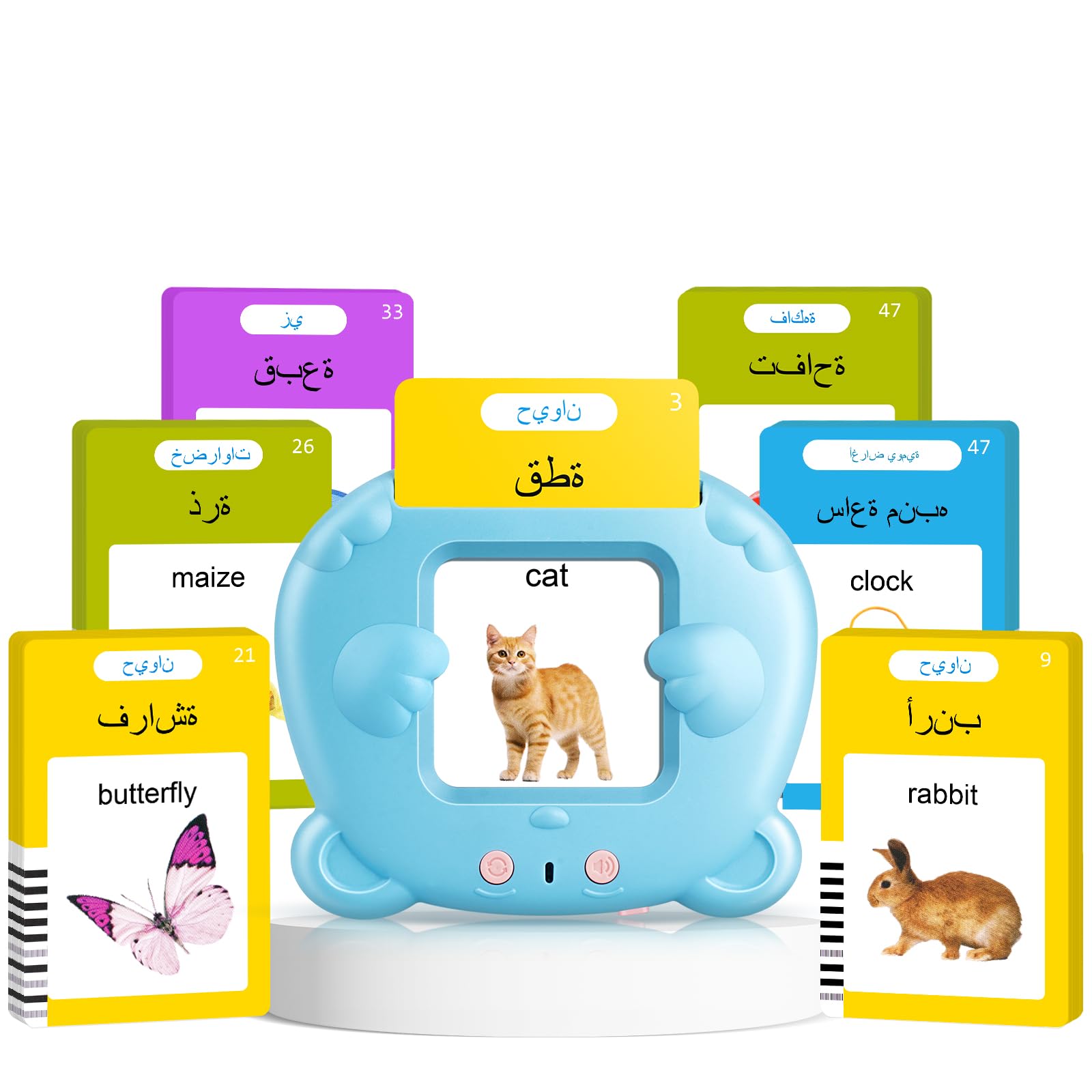
- Includes 255 double-sided cards covering 510 sight words.
- The reader speaks Modern Standard Arabic and English.
- Includes three nursery rhymes in dual languages.
Best For: Arabic-English households introducing spoken vocabulary with illustrations and dual-language songs.
Bilingual English Chinese Talking Flash Cards, 224 Words
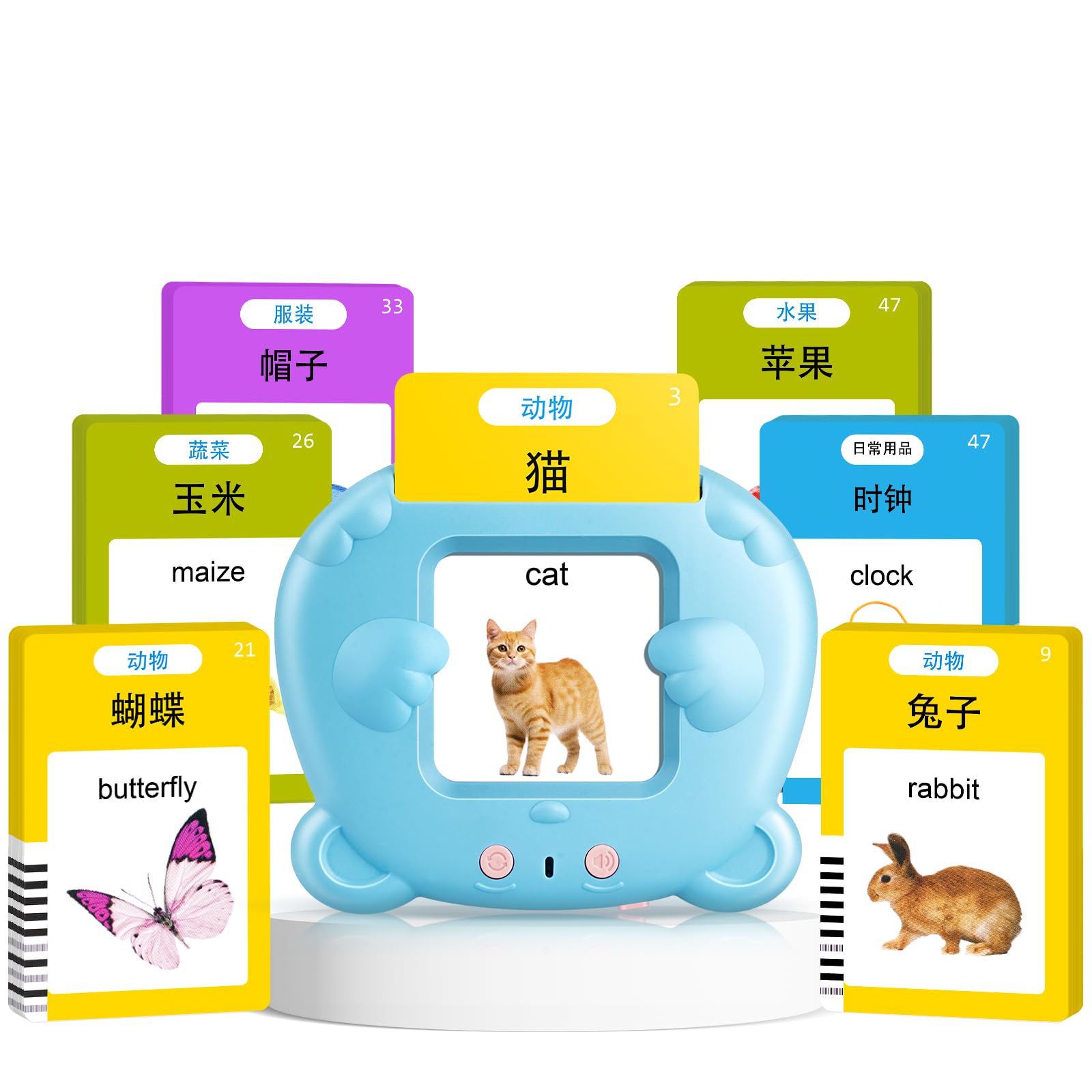
- Includes 112 double-sided cards featuring 224 sight words.
- The reader speaks in standard Mandarin and English.
- The reader has a 4.5-hour rechargeable battery.
Best For: Families seeking Mandarin-English vocabulary practice with spoken words and a rechargeable reader.
Brazilian Portuguese English Talking Flash Cards
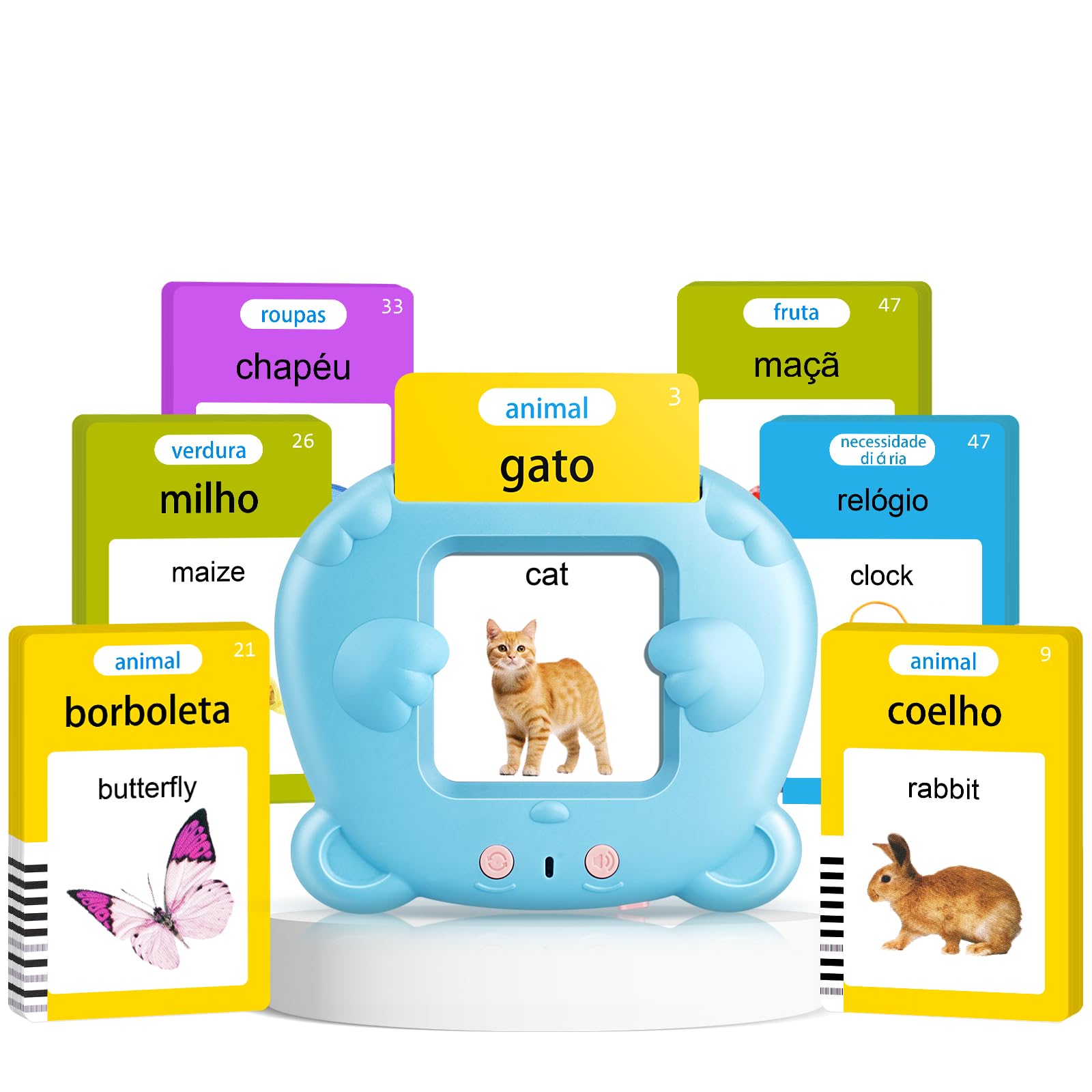
- Includes 112 double-sided cards covering 224 sight words.
- The reader speaks in Portuguese and English and includes a song mode.
- The rechargeable reader lasts up to 4.5 hours.
Best For: Portuguese-English households introducing early spoken vocabulary through pictures and audio.
Italian English Talking Flash Cards, 224 Words
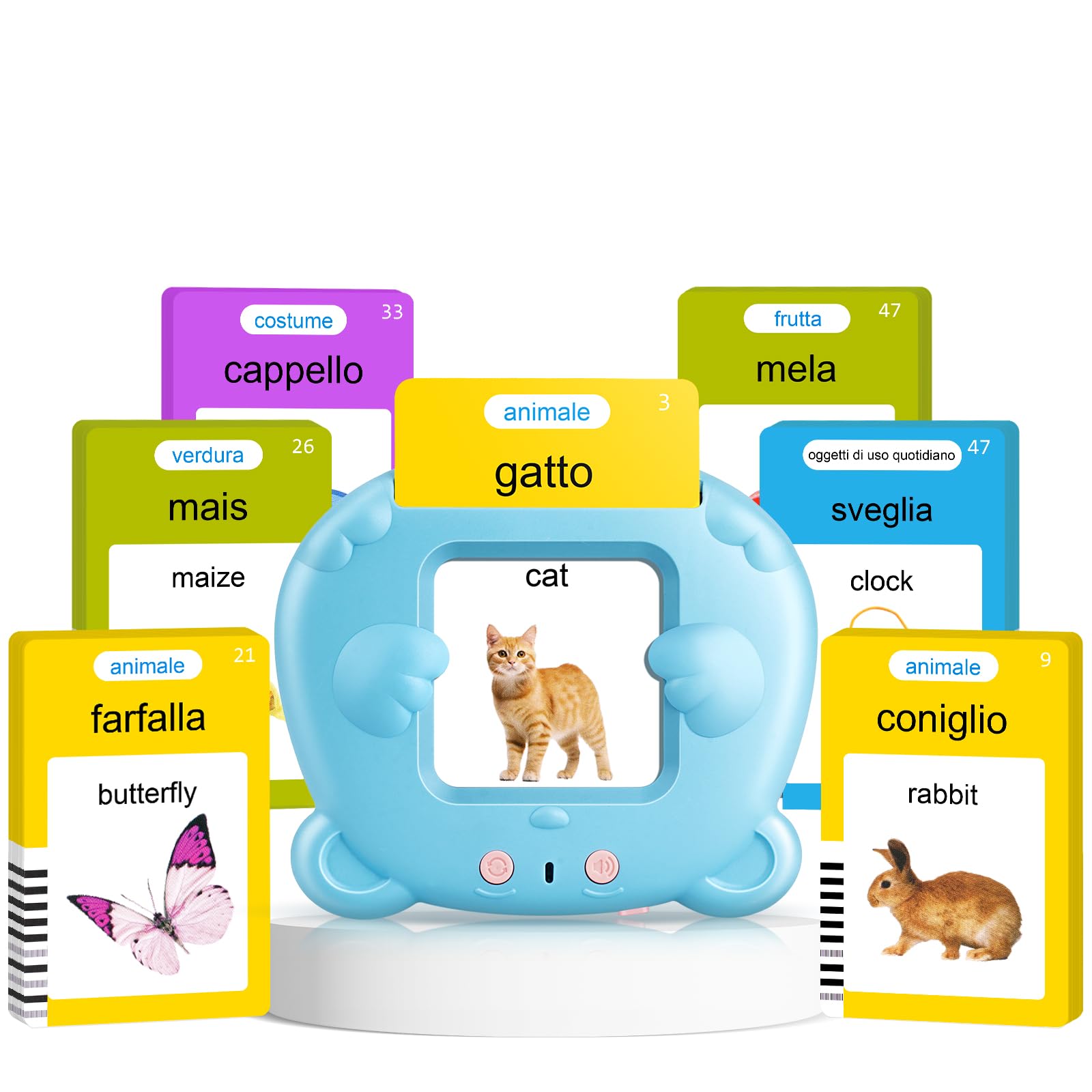
- Includes 112 double-sided cards covering 224 sight words.
- The reader speaks in Italian and English and includes three nursery rhymes.
- Three modes allow Italian-English rotation or single-language playback.
Best For: Italian-English families looking for an audio-supported first-word activity for toddlers.
Learning Resources Sight Word Stomp!
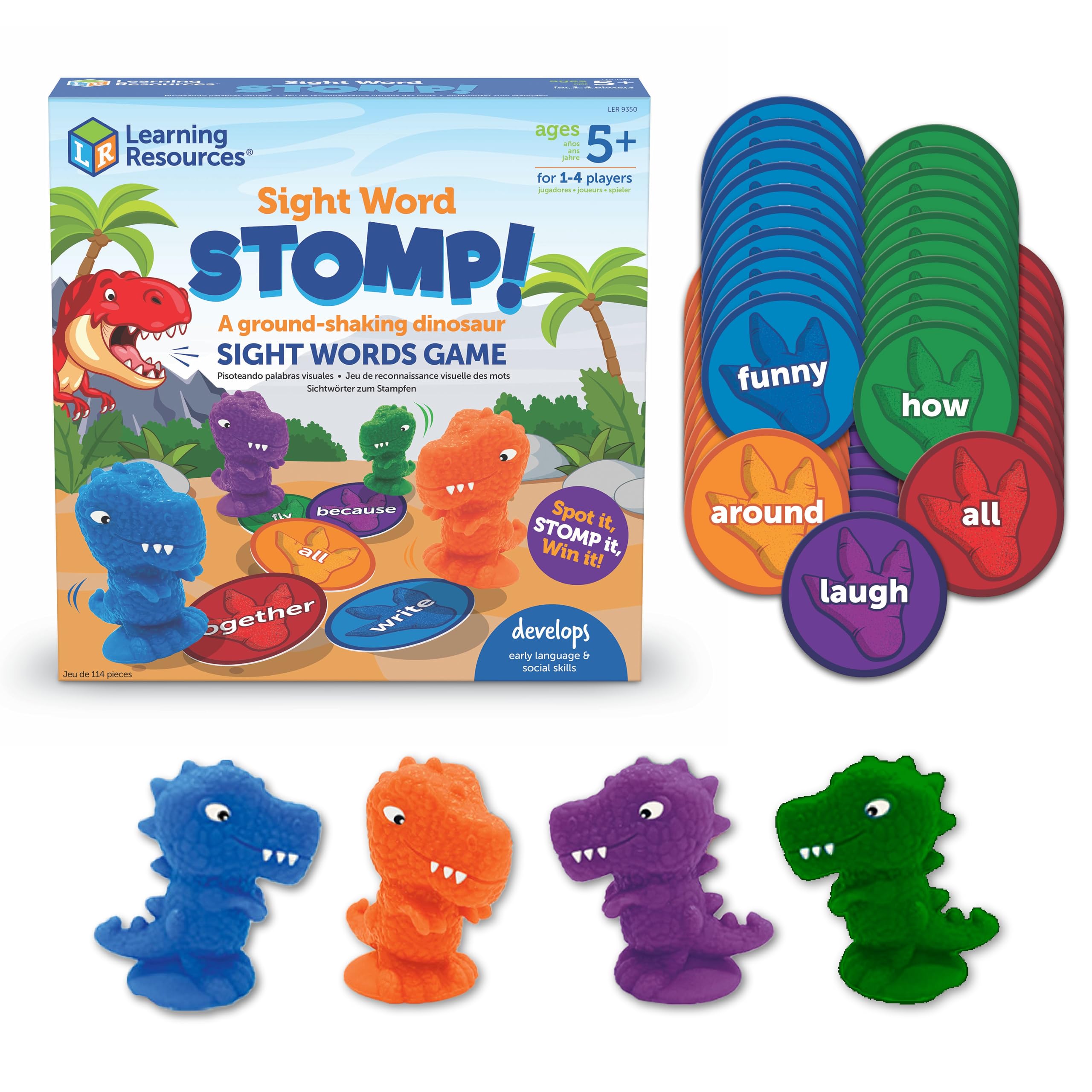
- Includes 110 double-sided cards with 220 sight words.
- Four dinosaur stompers attach to word cards with suction cups.
- Sight words are color-coded from Pre-Primer through Third Grade.
Best For: Children ages 5 and up who enjoy movement and game-based sight-word practice.
hand2mind Alphabet Picture Mnemonic Cards
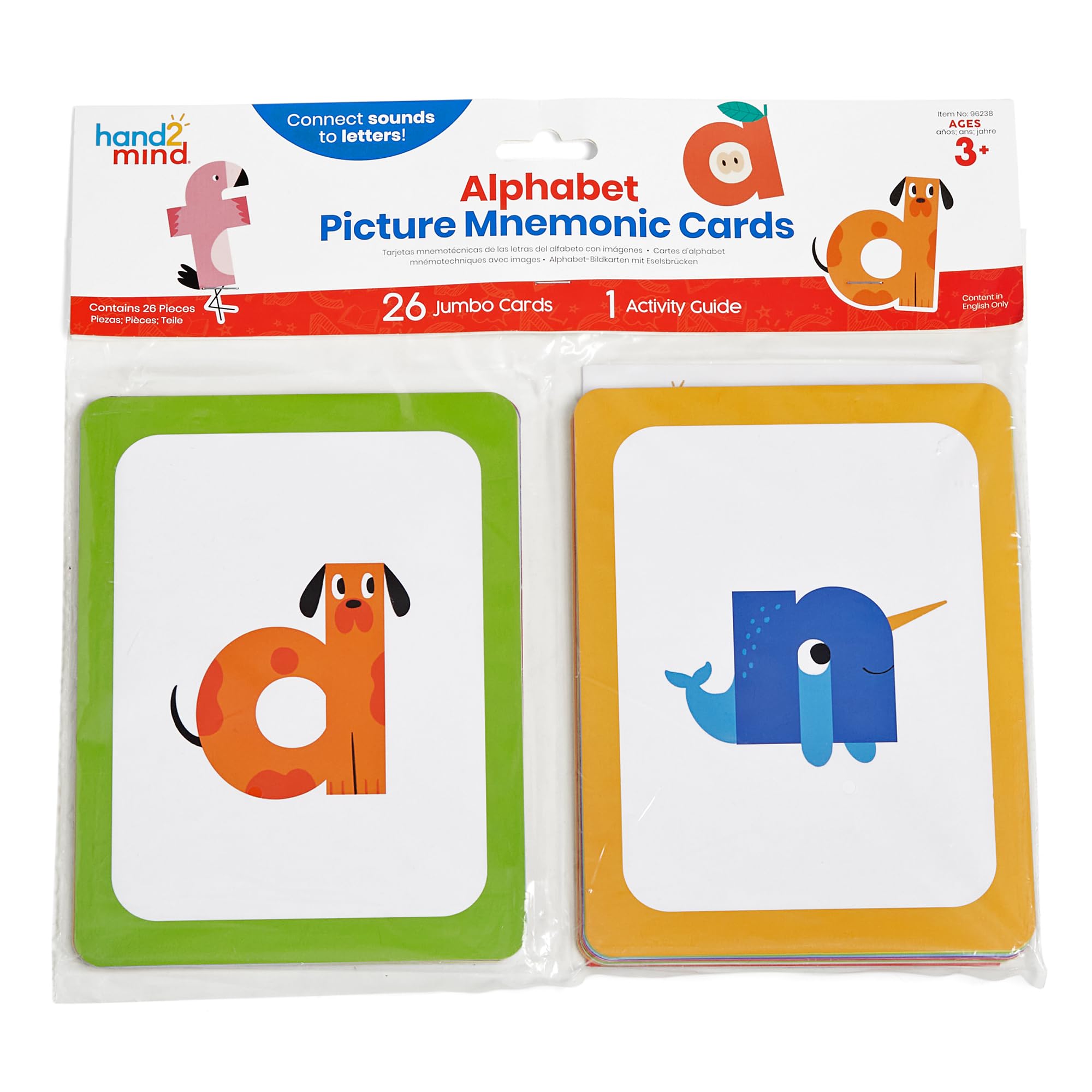
- Includes 26 double-sided embedded-picture mnemonic cards and an activity guide.
- Picture cues link lowercase letter shapes to familiar images and sounds.
- The jumbo cards measure 6 by 8 inches.
Best For: Young learners building letter recognition and phonics with large visual prompts.
Interactive Phonics Practice
Educational Insights Hot Dots Phonics Fun Set - Preschool and Kindergarten Flash Cards Compatible with Interactive Pen, Preschool Learning Activities, Learn to Read Activity for Kids Ages 3 and Up
This Hot Dots set pairs reading practice with an answer-checking pen, giving children immediate visual and audio feedback as they work. The 80 double-sided cards provide 160 activities across letter sounds, vowels, blends, digraphs, and sight words.
The pen lights green for correct answers and red for incorrect ones, and its sounds can be muted. It is a useful option for independent practice when a child is ready to respond to prompts and self-correct.
The pen needs two AAA batteries, which are not included, so plan for those separately.
Best For: Preschoolers and kindergarteners practicing letter sounds, blends, and sight words independently.
| Pros | Cons |
|---|---|
|
|
Choose this set when phonics and early reading are the priority and a child can use the pen to check answers. Its range of letter-sound and sight-word activities offers more variety than a single-skill deck.
The battery-powered pen adds interactive feedback, while its sounds can be muted. Check that the child is comfortable with the Hot Dots answer-dot format and have two AAA batteries ready.
Guided Number and Counting Work
Educational Insights Hot Dots Numbers & Counting Set - Preschool Learning Activities, Interactive Math Flash Cards for Toddlers 3-5 Years, Kindergarten Classroom Must Haves & Homeschool Essentials
The Hot Dots Numbers & Counting set combines 36 double-sided cards with an interactive pen and a handled storage case. Its 72 activities cover number recognition, number words, counting, and sequencing, making it a focused introduction to early math.
Children press the pen to an answer dot for visual and audio feedback; the pen lights green or red and can be muted. This format suits young learners who benefit from immediate responses as they practice.
The pen requires two AAA batteries, which are not included, so factor that into setup.
Best For: Preschoolers ages 3–5 learning number recognition, counting, number words, and sequencing.
| Pros | Cons |
|---|---|
|
|
This is a good fit when a preschooler is ready to practice several early number skills with a self-checking tool. The handled case helps keep the set together for home or classroom use.
It focuses on early number learning rather than broader reading or language topics, so choose it for a math-centered activity. Check that the included pen format suits the child, and supply two AAA batteries.
Large Spanish-English Word Set
Spanish & English Talking Flash Cards for Kids, 510 Sight Words Bilingual Flash Cards, ABC & Number Learning Toys, Montessori Toys, Speech Therapy Toys, Children's Sensory Preschool Birthday Gifts
This talking set pairs a reader with 255 double-sided cards covering 510 words across topics such as animals, food, transport, people, and jobs. It reads words aloud and includes simulated sounds and a mode for three children’s songs.
The Spanish-English rotation and single-language modes support different practice routines, while the screen-free format keeps the activity card-based. The rechargeable reader is described as lasting up to 4.5 hours.
Children need to insert each card barcode-side into the reader slot; the mode-switch instructions mention English and Spanish, which is a practical detail to check when setting it up.
Best For: Families and educators seeking broad spoken Spanish-English vocabulary practice with a card reader.
| Pros | Cons |
|---|---|
|
|
Consider this set if a child will benefit from a large Spanish-English vocabulary collection paired with spoken prompts. Its 510 words and everyday themes provide more breadth than a small alphabet deck, and the reader adds sounds and songs.
It does require the child or adult to feed cards into the device. Confirm that the language modes suit your intended practice, especially since all three named modes are English or Spanish.
Korean-English Audio Vocabulary
Korean English Bilingual Talking Flash Cards for Toddlers, 510 Words
This set includes a card reader and 255 double-sided cards covering 510 sight words across animals, transportation, food, fruits, and jobs. The reader speaks in Korean and English, and three audio modes allow language rotation or a single-language setting.
Three nursery rhymes in dual languages add another listening activity. Its rechargeable battery is described as lasting up to 4.5 hours, and the cards provide a screen-free format for home or preschool practice.
Check the mode controls before a child uses it alone: the notes also give mode-switch instructions that name English and Korean variations.
Best For: Korean-English households seeking spoken vocabulary practice across familiar early-learning themes.
| Pros | Cons |
|---|---|
|
|
Choose this option when Korean-English listening practice is more useful than general English vocabulary cards. The large word set spans common themes, and nursery rhymes add a listening component beyond word-by-word playback.
As with other reader-based cards, the child needs to insert cards correctly and the reader needs charging. Review the audio controls first to ensure the rotation and single-language modes match how your family plans to use both languages.
Arabic-English Vocabulary and Songs
Arabic English Bilingual Talking Flash Cards for Toddlers, 510 Words
A reader and 255 double-sided cards make up this 510-word Arabic-English set. Its topics include animals, food, and transportation, while the reader speaks Modern Standard Arabic and English.
Three nursery rhymes in dual languages add variety to the word practice. The compact cards are designed for preschool use at home or in a classroom, and the reader has a rechargeable battery described as lasting up to 4.5 hours.
To get audio, a card must be inserted into the machine with its barcode positioned correctly. Check the controls before independent use, since the mode instructions include three language settings.
Best For: Arabic-English households introducing spoken vocabulary with illustrations and dual-language songs.
| Pros | Cons |
|---|---|
|
|
This is a targeted choice for families who want Arabic and English words spoken alongside pictures. The Modern Standard Arabic detail helps clarify the variety of Arabic used, and the dual-language songs create a second type of listening practice.
It is less useful if you need a general English-only set or if you want cards that work without a reader. Confirm the audio mode controls before handing it to a child for independent use.
Chinese-English Spoken Word Cards
Bilingual English Chinese Talking Flash Cards for Toddlers, 224 Words
This set contains 112 double-sided cards with 224 sight words covering animals, fruit, and everyday items. A reader speaks the words in standard Mandarin and English, and a children’s song mode adds another way to engage with the cards.
The screen-free setup is aimed at toddler learning, with a rechargeable reader described as lasting 4.5 hours. Card insertion matters: the barcode needs to face correctly for playback.
The mode-switch instructions name English and Spanish despite the Chinese-English title and Mandarin audio detail, so confirm the controls meet your language needs before settling on this set.
Best For: Families seeking Mandarin-English vocabulary practice with spoken words and a rechargeable reader.
| Pros | Cons |
|---|---|
|
|
Consider this set when Mandarin-English vocabulary is the main goal and a 224-word collection is sufficient. Its spoken words and song mode make it more interactive than picture-only cards, though playback depends on using the reader and inserting cards correctly.
The mode instructions conflict with the Chinese-English focus, so check that the actual audio settings support the practice you want. Families who prefer standalone cards may find a reader-free deck simpler.
Portuguese-English First Vocabulary
Brazilian Portuguese English Bilingual Talking Flash Cards for Toddlers
This Portuguese-English reader set includes 112 double-sided cards covering 224 sight words from themes such as animals, transportation, food, and daily objects. It reads the words in Portuguese and English, with simulated sounds and a children’s song mode.
The rechargeable reader is described as lasting up to 4.5 hours, and its no-screen approach keeps practice centered on cards and sound. A barcode must be inserted into the reader for playback.
The setup instructions name English and Spanish for its three audio modes even though the set is Portuguese-English, so check that the device’s available modes fit your needs before buying.
Best For: Portuguese-English households introducing early spoken vocabulary through pictures and audio.
| Pros | Cons |
|---|---|
|
|
This set makes sense for a family looking specifically for Portuguese-English spoken words and picture-based practice. Its 224 words cover common themes, and simulated sounds and songs add variety.
The setup notes create uncertainty around the advertised language modes, so verify that Portuguese is available as intended before relying on the reader. Also account for the card-insertion step, which makes this less hands-off than a simple printed deck.
Italian-English Spoken Vocabulary
Italian English Bilingual Talking Flash Cards for Toddlers, 224 Words
The set pairs a reader with 112 double-sided cards and 224 sight words across animals, food, transportation, and daily objects. It reads the words in Italian and English and includes three built-in nursery rhymes.
The rechargeable reader is described as lasting up to 4.5 hours, and the cards offer a screen-free way to practice language through pictures and sound. Playback depends on inserting a card into the reader.
The mode instructions include English and Italian rotation and single-language settings, a useful detail for families planning to focus on one language at a time.
Best For: Italian-English families looking for an audio-supported first-word activity for toddlers.
| Pros | Cons |
|---|---|
|
|
This is a focused choice for Italian-English language exposure, with a smaller word set than some talking options. Its dedicated Italian and English modes make it straightforward to practice one language or alternate between both.
The audio and songs add interaction, but the child cannot use it as a reader-free deck. Check whether the vocabulary themes and word set are enough for the child’s current learning routine.
Sight Words as an Active Game
Learning Resources Sight Word Stomp! - Alphabet Toys, Phonics Flash Cards, Classroom Board Games, ABC Homeschool, Reading Manipulatives, Gifts for Boys and Girls, Visual Vocabulary
Sight Word Stomp! turns reading practice into a game with four colorful dinosaur stompers that suction to word cards. The set includes 110 double-sided cards with 220 sight words, color-coded from Pre-Primer through Third Grade.
This gives families and classrooms a way to bring active play into repeated word recognition, rather than relying only on call-and-response cards. Multiple ways to play support use in homeschool, classrooms, and family game night.
It is aimed at children ages 5 and up, so consider whether the child is ready for sight-word practice and can use the stompers as intended.
Best For: Children ages 5 and up who enjoy movement and game-based sight-word practice.
| Pros | Cons |
|---|---|
|
|
Pick this when a child already has some reading practice underway and responds well to active games. Its color-coded difficulty levels and 220 words offer room to move across stages, while the dinosaur pieces make the activity more physical than standard flash cards.
The game format needs space for cards and stompers, so it may be less convenient for quick, quiet drills. Check that the age range and sight-word focus fit the learner.
Large Alphabet and Picture Cues
hand2mind Alphabet Picture Mnemonic Cards, ABC Flashcards for Kids, Classroom Alphabet Cards, Early Learning Flash Cards, Letter Recognition, Montessori Alphabet Cards, Toddler Learning Activities
These jumbo alphabet cards connect lowercase letter shapes to familiar pictures that cue the corresponding sounds. Each card is double-sided, with uppercase and lowercase letters and a smaller visual reminder on the back.
The set includes 26 cards and an activity guide with ideas for letter recognition, phonics, and word building. Their 6 by 8 inch size makes the cards easy to see in group activities and classroom displays.
This is a focused, screen-free option for early literacy rather than a broad vocabulary deck, so choose it when alphabet and sound practice are the main goals.
Best For: Young learners building letter recognition and phonics with large visual prompts.
| Pros | Cons |
|---|---|
|
|
This option suits a child who is beginning to connect letters with sounds and benefits from large, visible picture prompts. The jumbo format and activity guide also work well for adult-led group practice.
It is a narrower learning tool than a mixed subject or high-volume vocabulary set, so consider whether alphabet recognition is the current priority. Use the guide to extend the cards into simple word-building activities rather than expecting broad topic coverage.
How to Choose Educational Flash Cards
How We Picked Best Educational Flash Cards
We prioritized products that use cards as a meaningful part of learning, whether children practice phonics, number skills, sight words, or early vocabulary. The selection includes plain visual prompts, self-checking pen sets, and talking-card readers so families can match the activity style to the learner.
We also looked at the intended age and the specific skill each set supports. Some options focus on one clear goal, such as alphabet sounds or preschool counting; others add breadth through bilingual word collections or multi-level sight-word practice.
Specialized emotion cards, manipulatives, and near-duplicate talking-card offers were left out to keep this lineup centered on distinct card-based learning needs.
Comparing Best Educational Flash Cards
The biggest difference is how much adult support and technology the activity needs. Jumbo picture mnemonic cards are easy to lead together and emphasize seeing letters, while Hot Dots sets give immediate answer feedback through a pen.
Talking readers add spoken vocabulary and sounds, but children must insert cards correctly and adults should review the language modes before independent use.
Content scope matters too. A focused phonics or counting set can target a specific preschool skill without adding unrelated material.
Larger bilingual readers expose children to many everyday words, while Sight Word Stomp! uses game pieces and staged word levels for active reading practice. Consider whether you want a short daily drill, a group activity, or a play-based routine.
| Product | Standout features | Best for |
|---|---|---|
| Educational Insights Hot Dots Phonics FunCheck Price |
| Preschoolers and kindergarteners practicing letter sounds, blends, and sight words independently. |
| Educational Insights Hot Dots Numbers & CountingCheck Price |
| Preschoolers ages 3–5 learning number recognition, counting, number words, and sequencing. |
| Spanish & English Talking Flash Cards, 510 WordsCheck Price |
| Families and educators seeking broad spoken Spanish-English vocabulary practice with a card reader. |
| Korean English Talking Flash Cards, 510 WordsCheck Price |
| Korean-English households seeking spoken vocabulary practice across familiar early-learning themes. |
| Arabic English Talking Flash Cards, 510 WordsCheck Price |
| Arabic-English households introducing spoken vocabulary with illustrations and dual-language songs. |
| Bilingual English Chinese Talking Flash Cards, 224 WordsCheck Price |
| Families seeking Mandarin-English vocabulary practice with spoken words and a rechargeable reader. |
| Brazilian Portuguese English Talking Flash CardsCheck Price |
| Portuguese-English households introducing early spoken vocabulary through pictures and audio. |
| Italian English Talking Flash Cards, 224 WordsCheck Price |
| Italian-English families looking for an audio-supported first-word activity for toddlers. |
| Learning Resources Sight Word Stomp!Check Price |
| Children ages 5 and up who enjoy movement and game-based sight-word practice. |
| hand2mind Alphabet Picture Mnemonic CardsCheck Price |
| Young learners building letter recognition and phonics with large visual prompts. |
Choosing Flash Cards for Early Language Learning
For toddlers and preschoolers learning words, check whether the cards provide pictures, spoken prompts, or both. A reader can make pronunciation part of the activity, while picture-only cards invite an adult to name objects and ask the child to find or repeat them.
For bilingual sets, verify the actual languages and audio modes. Some product instructions name different mode languages than the product title, so that detail deserves a careful check.
Pay attention to setup as well. Talking sets rely on a card reader and correct barcode insertion; interactive pens need batteries.
If the activity will travel between home and preschool, consider how easily the reader, cards, and any small game pieces can be kept together.
Phonics and Sight-Word Practice for Growing Readers
Alphabet cards with embedded picture cues can help connect a letter shape with its sound. For a child ready for more, a phonics set can add vowels, blends, digraphs, and sight words, while a staged deck introduces increasingly advanced reading words.
Choose a level that supports confidence and practice without expecting one product to cover every part of learning to read.
Game-based cards suit children who enjoy taking turns or moving during practice. The dinosaur stompers in Sight Word Stomp! make recognition active, while a self-checking pen offers a quieter one-child activity.
Think about whether a child learns best through conversation, independent feedback, or a playful group routine.
Which Educational Flash Cards Fit Your Child?
Choose the Hot Dots phonics set for self-checking letter-sound and sight-word practice, or the numbers set for preschool counting and sequencing. The alphabet mnemonic cards work well when large visual letter cues are the priority; Sight Word Stomp! suits children who want movement and game play.
For spoken bilingual vocabulary, select the reader whose languages match your household and review its mode controls. The Spanish-English set offers the broadest selected word collection, while the Korean-English and Arabic-English options add language-specific practice and songs.
The Portuguese-English, Italian-English, and Mandarin-English sets provide smaller word collections for targeted early exposure.